

[Signed by the author] Ryuhei Yokoyama "TOKYO GRAFFITI ARCHIVE" (Commentary: Enrico Isamu Oyama)
[Signed by the author] Ryuhei Yokoyama "TOKYO GRAFFITI ARCHIVE" (Commentary: Enrico Isamu Oyama)
Couldn't load pickup availability
*Signed by Ryuhei Yokoyama.
Fading Voices, Street Reality
A photobook of graffiti captured from 2015 until just before the Tokyo Olympics 2020
"Graffiti" is the act of marking one's name on the street using aerosol sprays or felt-tip pens to express one's existence. This culture, which began with young people in New York in the late 1960s, spread globally and to Japan with the rise of street culture, and has now evolved to be seen everywhere.
This book compiles Japanese graffiti photographs as a record of landscapes. From over 5,000 photos taken primarily in the Shibuya area from 2015 until just before the Tokyo Olympics 2020, 210 have been selected.
This is a valuable collection of records of graffiti, most of which have already been erased or whose buildings have disappeared.
"The landscape belongs to no one, and at the same time, it belongs to everyone."
It was destined to disappear.
It was called graffiti, and it was everywhere.
Its existence, a fleeting urban landscape doomed to an eternal cycle of appearance and disappearance, destruction and regeneration, seemed to overlap through the lens.
As a photographer who has lived in Tokyo, frequented Shibuya, and observed and photographed the city for 20 years, I realized that it was an inseparable and important fact composing the urban landscape, and so I began to photograph it. This was amidst the violent transformation of the very structure of the city due to the Tokyo Olympics 2020 and the Shibuya redevelopment, and the root-and-branch loss of urban life.
The administration was desperately trying to cover up street culture for the sake of its external image for the Olympics. The once diverse and free urban landscape was beginning to change dramatically.
Someone had to record it──.
(From "Preface" by Ryuhei Yokoyama)
■Includes an essay by Enrico Isamu Oyama, "Urban Surface – A Brief History of Aerosol Writing," at the beginning of the book!
Street art is now a massive industry, sweeping the globe alongside hip-hop music. It has transitioned from adolescence to maturity, influencing various fields such as economics, culture, academia, and education. This is evidence that youth culture, which once leaned towards anti-establishment, is gaining acceptance and citizenship within society.
While embracing such a complex, multifaceted, and even fragmented dynamism, the core of aerosol writing and street art is inextricably linked to the "city." The chaotic energy of the metabolizing city and the people, things, and events that gather there are cultivated, creating unexpected competition and emergence, and forming the basis for new expressions and cultures. These are recorded, introduced, spread virally, and eventually culminate in outstanding talent and rare masterpieces. They are then evaluated, sometimes preserved, and even relocated. The urban surface, which encompasses all of these without exception, is a stratum, a battlefield, the internet, an art museum, and all of these at once.
(From Enrico Isamu Oyama's essay "Urban Surface – A Brief History of Aerosol Writing")
(From the publisher's website)
![[Signed by the author] Ryuhei Yokoyama "TOKYO GRAFFITI ARCHIVE" (Commentary: Enrico Isamu Oyama)](http://nagorobooks.com/cdn/shop/files/tokyografittiarchves.jpg?v=1780048285&width=1445)
![[Signed by the author] Ryuhei Yokoyama "TOKYO GRAFFITI ARCHIVE" (Commentary: Enrico Isamu Oyama)](http://nagorobooks.com/cdn/shop/files/HHYK0h3aYAA9VNa.jpg?v=1780048309&width=1445)
![[Signed by the author] Ryuhei Yokoyama "TOKYO GRAFFITI ARCHIVE" (Commentary: Enrico Isamu Oyama)](http://nagorobooks.com/cdn/shop/files/HHYK0iEbIAAZ7ar.jpg?v=1780048309&width=1445)
![[Signed by the author] Ryuhei Yokoyama "TOKYO GRAFFITI ARCHIVE" (Commentary: Enrico Isamu Oyama)](http://nagorobooks.com/cdn/shop/files/HHYK0iEbsAAnpMm.jpg?v=1780048309&width=1445)
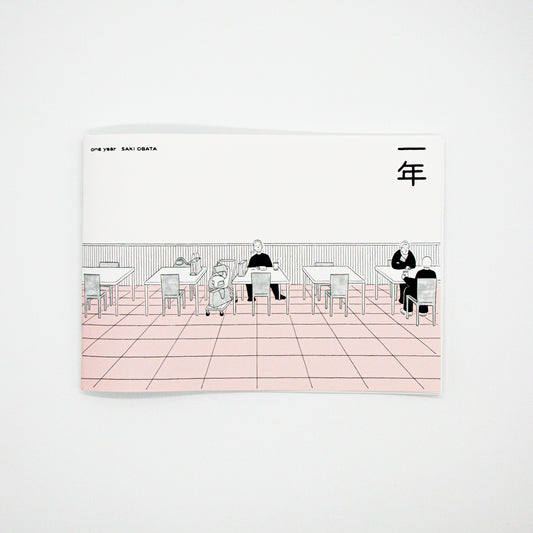
saki obata online exhibition "One Year"
-
Ayaki Obata "One Year"
Regular price ¥1,650-Regular priceUnit price per -
 Sold out
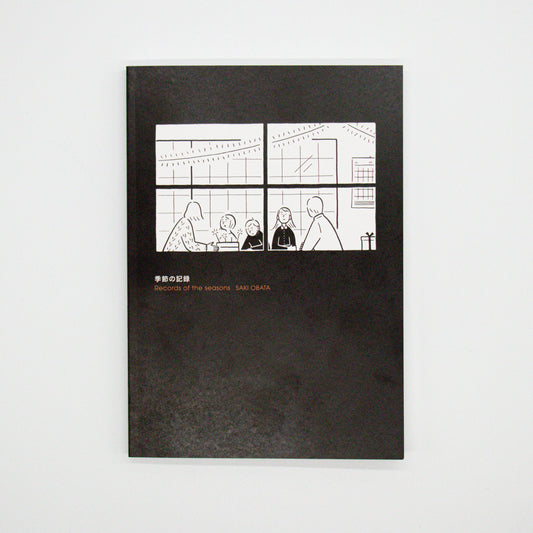
Ayaki Obata "Seasonal Records"
Regular price ¥2,200-Regular priceUnit price per -
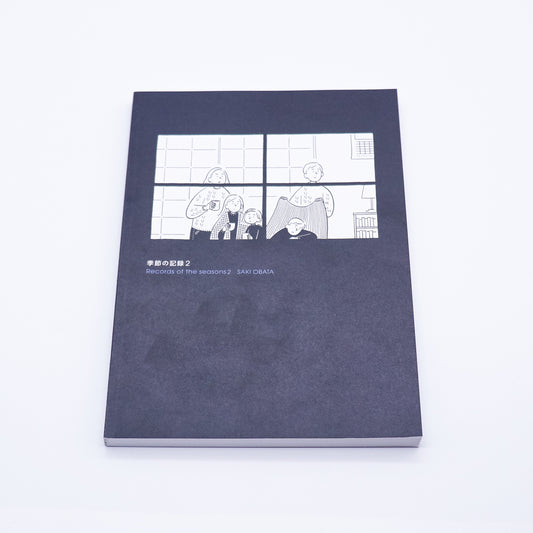
Obata Saki "Record of the Seasons 2"
Regular price ¥2,420-Regular priceUnit price per